


Neurodermatitis, also known as atopic dermatitis or atopic eczema, is a chronic inflammatory skin condition that typically occurs in flare-ups. Between flare-ups, the skin may appear largely normal. During a flare-up, however, the characteristic symptoms often appear: redness, itching, and dry scaling.
A corresponding diagnosis is only made by a specialist. Here you can already read about the symptoms and signs that are classic for neurodermatitis.
What are typical symptoms and signs of neurodermatitis?
- Intense itching
- Dry, possibly flaky skin
- Eczema: varies by age
- possibly so-called shiny nails, inflammation of the lips/corners of the mouth
- Occurrence of associated atopic stigmata (skin signs, e.g. double lower eyelid fold, or the occurrence of other atopic diseases, such as hay fever and asthma)
Where on the body do neurodermatitis symptoms appear?
The symptoms can appear on various parts of the body and vary depending on age and the individual course:
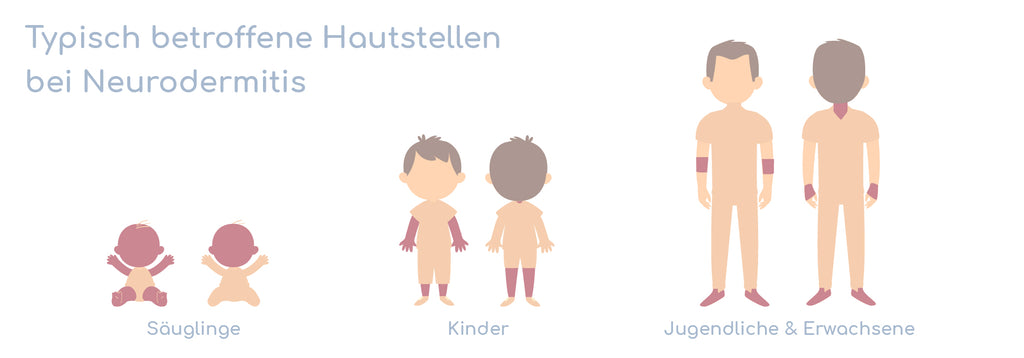
Infants and babies: in infants and babies, extensive, adherent, yellowish scales or reddish, sometimes weeping skin areas are often found on the face, scalp (then as so-called cradle cap) as well as on the extensor surfaces of the arms and legs.
Children: in older children, dry, scaly eczema mainly appears on the extremities, joint creases, and neck; in severe cases, thickening of the skin with coarsened skin texture (so-called lichenification) is already present.
Adolescents and adults: in adolescents and adults, neurodermatitis often occurs in the crooks of the arms, behind the knees, on the wrists, neck, face, and décolleté.
Can I recognize and diagnose neurodermatitis myself?
The described symptoms and signs are characteristic of neurodermatitis. However, other skin conditions can also have similar symptoms, which is why the diagnosis must ultimately be made by a doctor.
For this reason, we recommend that you consult a dermatologist or pediatrician if you suspect neurodermatitis. Only a specialist can make a precise diagnosis and recommend appropriate therapy.
The good news upfront: approximately 60% of affected children are symptom-free as young adults. Chronic courses are more common when several family members suffer from neurodermatitis, hay fever, or asthma, when one also suffers from these diseases, or when the course was already severe in childhood.
You are also welcome to click through our skin care guide for babies - maybe you will find helpful answers here!

O U R E X P E R T
Dr. med Michaela Hagemann I boep founder, doctor & mother of three


