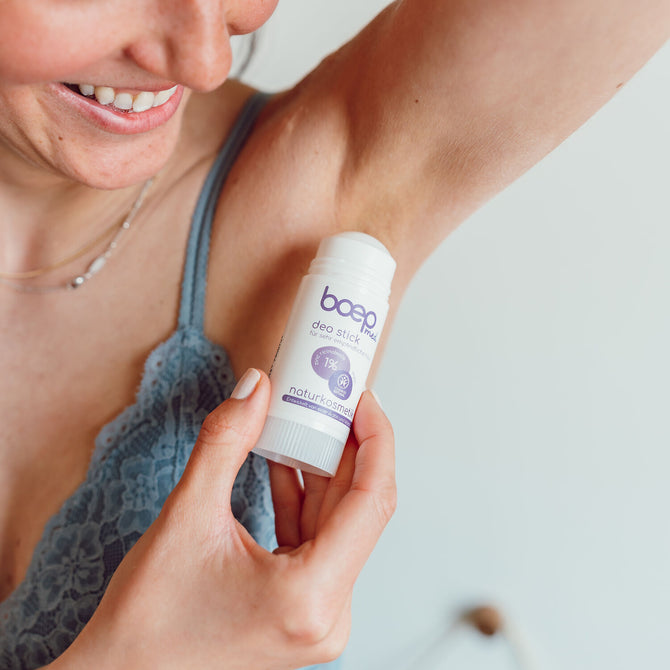



Deodorant and antiperspirant are often used synonymously, yet they have completely different functions and modes of action. Learn here how they differ and which of the two products is right for you and your individual needs.
Why do we sweat at all?
What seems to be an unpleasant topic for many is a physiological, healthy, and above all vital process of our body. By producing sweat, the body can cool itself and thus protect itself from overheating and dehydration. The sweat glands are distributed all over the skin; they work like small valves. At the same time, sweating plays a role in the detoxification of the body, as metabolic products and salts are excreted through sweat. It also helps to keep the skin supple and support its protective function.
Deodorant or Antiperspirant – the Differences
A deodorant, or "deo" for short, reduces unpleasant body odor caused by the growth of bacteria on the skin. Sweat itself is odorless – only when bacteria decompose it does the typical body odor develop. Deodorants work through antimicrobial ingredients that inhibit bacterial growth, and often also through added fragrances that provide a fresh feeling. Important to know: A deodorant does not affect sweat production itself. So you sweat just as much as before.
An antiperspirant, on the other hand, acts preventively and reduces sweat production. The aluminum salts it contains, such as aluminum chloride or aluminum lactate, constrict the sweat glands and thereby reduce sweat production in the affected areas. This not only prevents odor but also reduces the formation of sweat stains. The body's physiological process is thus impaired and, to a certain extent, inhibited by an antiperspirant.
Differences in the Application of Deodorants and Antiperspirants
The application of deodorants and antiperspirants differs in small but crucial details. You can apply a deodorant at any time, even several times a day, if you want to refresh yourself or cover up body odor. It is particularly practical for on-the-go use, as it requires no special conditions and works immediately.
An antiperspirant, however, should be applied specifically and ideally to clean, dry skin, preferably in the evening before going to bed. At night, the sweat glands are less active, allowing the aluminum salts to penetrate the gland ducts better and develop their effect. The antiperspirant will then work the next day, even if you shower. It is important not to apply it directly after shaving or on irritated skin to avoid skin irritation.
What is suitable for whom?
The choice between deodorant and antiperspirant depends on your individual needs.
If you sweat little or moderately and primarily want to prevent body odor, a deodorant is the right choice. It is well suited for everyday use if you want to feel fresh without affecting natural sweat production. Especially for sensitive skin, there are deodorants without perfume or fragrances that are gentle on the skin.
An antiperspirant, on the other hand, is ideal if you sweat heavily or want to specifically reduce sweat production – be it due to stress, sports activities, or hot temperatures. It helps to avoid sweat stains and provides a long-lasting dry feeling. However, it inhibits a protective process of the body – one should simply be aware of this.
Can both be combined?
Today, there are many combination products that unite the effects of deodorant and antiperspirant, thus offering double protection against body odor and sweat. These products often contain aluminum salts and fragrances to achieve the desired effect – this can be a problem, especially for people with very sensitive skin or fragrance allergies. In such cases, we recommend fragrance-free deodorants.

O U R E X P E R T
Dr. med Michaela Hagemann I boep founder, doctor & mother of 3


